

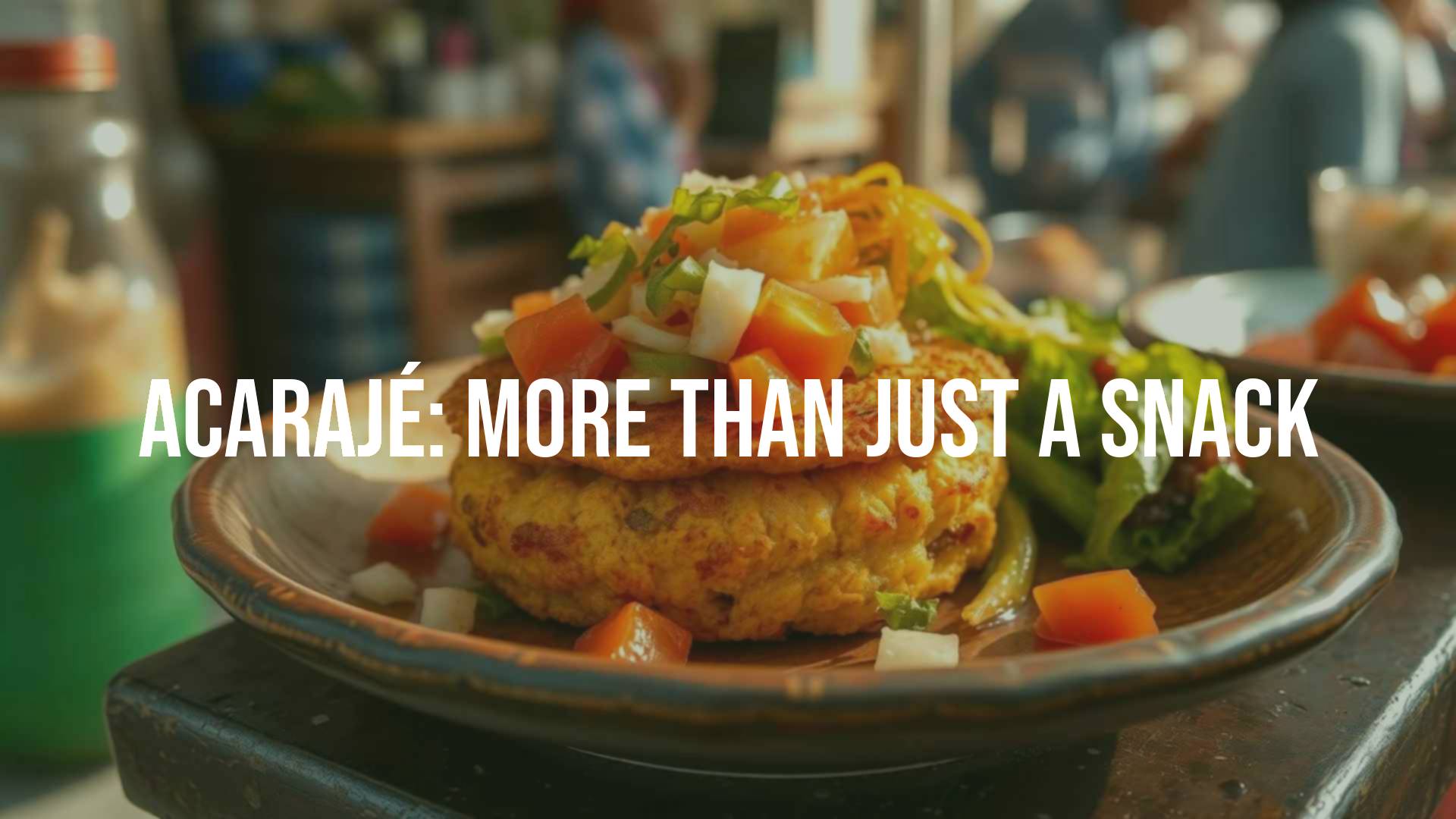
Acarajé is a Brazilian snack made from black-eyed peas, famous for its mix of crispy and soft textures and bold flavors. More than just food, acarajé is an important symbol of Brazil’s culture, especially in Bahia, where it connects people to local history and African roots. Its crunchy outside, soft inside, and hearty fillings make it a favorite on the streets and beaches, offering a memorable taste in every bite.

What is acarajé?
Acarajé is a fried patty made from mashed black-eyed peas mixed with onions and, at times, dried shrimp. Its outside turns golden and crunchy when fried, while the inside stays soft and bready. The patty is split and stuffed with different toppings, making it a filling snack or meal that is easy to eat on the go. Although people link it mostly with Brazilian street food, its background reaches back to Africa, showing how cultures mix through food.
Where does acarajé come from?
Acarajé’s story starts with the Yoruba people of West Africa. When enslaved Africans were brought to Brazil, they carried their food traditions with them, including a similar fritter called akara. As slaves worked harsh jobs, mainly on plantations in Bahia, they kept their cultural habits alive, and acarajé became part of daily life in Brazil. Its journey across the ocean and its survival is proof of the lasting strength of African culture in Brazil.
Acarajé in Brazilian and African food
In Bahia, Brazil, acarajé is common on the streets and at the beach, sold by women called Baianas who wear white skirts and headscarves. Making and serving acarajé in Bahia includes many rituals, making it more than just food. In Nigeria and West Africa, its cousin akara is still popular as a street snack. While both dishes start with the same main ingredients, the fillings and meaning are different in each place. In Brazil, using palm oil for frying is especially important, bringing African tastes right into the heart of Bahia’s food.

Main qualities of acarajé
Acarajé gets its unique quality from how it’s made. The batter is beaten well to add air, giving the inside a dense, soft, bread-like feel, even though the dough doesn’t rise with yeast. When fried in palm oil, the patty turns a bright reddish-orange and gets very crispy on the outside. Instead of herbs, the strong taste of onion, sweetness from the peas, and the richness from the oil make up its flavor. The patty is then opened up and filled with rich, savory toppings, turning a simple bean cake into a complete meal.
Why is acarajé important in Brazilian culture?
In Bahia, acarajé is much more than something to eat. It stands for the history, pride, and identity of African Brazilians. The way it’s made and sold in public shows the hard work and creativity of people whose traditions survived difficult times. Its daily presence and the role of Baianas highlight how this snack has shaped local culture and community life.
Acarajé and Afro-Brazilian identity
For many, acarajé represents the heart of Afro-Brazilian culture. Baianas, the women who make and sell it, are seen as guardians of tradition. Their way of preparing and serving this food keeps alive the Yoruba customs passed down for generations. Eating acarajé is a way to honor and celebrate African contributions to Brazil’s identity.
Historical and religious importance
Besides being tasty, acarajé has religious meaning in Brazil. It is linked with Candomblé, an African-origin religion blended with Catholic beliefs. Acarajé is offered to Iansã, the goddess of winds and storms. This connection turns the making and eating of acarajé into a spiritual act for many, with certain steps and ingredients used for religious reasons, underlining its special place in Afro-Brazilian history.
Acarajé as street food in Bahia
Acarajé is a key part of daily life in Bahia. It’s easy to find on city streets and beaches, usually prepared in front of customers. Watching it being made and choosing your own fillings is part of what draws people in. Its popularity reflects how deep it runs in the social and economic structure of places like Salvador, both for locals and visitors.
What goes into acarajé?
Acarajé’s special taste comes from simple ingredients that work together well, especially when prepared the traditional way. Though there are newer versions, the basic recipe still echoes its origins.
Main ingredients
- Black-eyed peas (soaked and peeled by hand)
- Raw onions (for flavor)
- Dried shrimp or chili pepper (optional, for seasoning)
- All-purpose flour (sometimes used as a binder)
- Salt and black pepper (seasoning)
- Palm oil (dendê) for frying, occasionally mixed with vegetable oil

Peeling the beans removes bitterness and makes the patty smooth. While canned peas can save time for home cooks, the real thing uses dried beans.
Traditional fillings and sides
- Vatapá: a creamy paste of dried shrimp, nuts (peanuts, cashews), bread or manioc flour, and coconut milk
- Caruru: a stew with okra, tomatoes, peppers, nuts, and dried shrimp
- Vinagrete: chopped tomatoes, cucumbers, onion, cilantro, and lime juice
- Dried shrimp: rehydrated and used as a topping
These fillings add layers of flavor and texture, turning the fritter into a complete meal.
Vegan and vegetarian options
Traditional acarajé uses some animal-based ingredients, but you can make plant-based versions. The patty itself is vegan; just use plant-based swaps for fillings that usually have shrimp, like mushrooms or seaweed. The nut and coconut mixtures in vatapá are naturally meat-free, while vinagrete adds a fresh crunch. These substitutions let more people enjoy acarajé’s signature flavors.
How do you make acarajé?
Making acarajé the traditional way takes patience, especially when peeling the beans and beating the batter. Understanding these steps shows the effort behind this well-known dish.
Step-by-step preparation
- Soak dried black-eyed peas overnight or up to 24 hours.
- Remove the skins by rubbing the beans in water with your hands so the skins float up.
- Blend the peeled beans with onion (and chili, if using) into a thick, smooth paste.
- Beat the batter by hand to add air, which helps the fritter’s inside stay soft but dense.
- Season with salt and pepper.
- Shape the mixture and fry spoonsful of it in hot palm oil until golden and crispy.
- Drain on paper towels to remove extra oil.
- Prepare fillings like vatapá, caruru, and vinagrete while the fritters cook.

Traditional frying and serving
Palm oil is heated in a deep pan. Batter is dropped in and cooked in small batches. Baianas, the street vendors, are skilled at getting the right brown color and crunch. Pure palm oil is preferred for authenticity, though some use a bit of vegetable oil too. Once fried, the patties are cut open and filled to the customer’s preference.
What are common acarajé fillings and ways to serve it?
The base fritter is just the start. The range of fillings-from vatapá and caruru to simple salsas or shrimp-makes each acarajé unique and satisfying.
Vatapá: main filling
Vatapá is the most popular filling. It’s a smooth, thick mix made by blending dried shrimp, bread or manioc, peanuts, cashews, and coconut milk in palm oil. This creates a nutty, rich paste that pairs perfectly with the crispy fritter.
Caruru and other sides
Caruru is another traditional filler, made mainly with okra, tomatoes, peppers, and nuts, giving a different texture and a slight earthiness. Vinagrete, a tomato and cucumber salsa, goes on top for freshness. People often add a scoop of spicy sauce and extra dried shrimp, adjusting the spiciness to taste.
Street food versions and local differences
In Bahia, you can ask for extra shrimp or a spicier sauce. While versions elsewhere in Brazil might include new fillings or changes, classic acarajé with crispy beans and vatapá/carruru is most prized. Less traditional fillings like ham salad or cheese show up in some places but are not typical of Bahia.
How is acarajé different from Nigerian akara?
Acarajé and Nigerian akara look alike and share a common origin, but changes over time have made each unique.
| Feature | Brazilian Acarajé | Nigerian Akara |
|---|---|---|
| Main Ingredients | Black-eyed peas, onions, sometimes dried shrimp | Black-eyed peas, onions |
| Oil Used | Palm oil (dendê) | Usually vegetable oil |
| Serving Method | Split and stuffed with fillings | Usually eaten alone or with bread/pap |
| Common Fillings | Vatapá, caruru, vinagrete, dried shrimp | Rarely filled, sometimes served with sauce |
| Cultural Context | Symbol of Afro-Brazilian culture; sold by Baianas | Common breakfast or snack |

Is acarajé nutritious? What should people with allergies know?
Acarajé, because it is deep fried and often filled with rich pastes and shrimp, is high in calories and fat but also offers some nutrients from beans, nuts, and shrimp.
Typical nutrition (per serving):
- Calories: about 475
- Total fat: 30g (including 14g saturated fat)
- Protein: 17g
- Carbs: 36g
- Fiber: 10g
- Other: Contains Vitamin C, iron, potassium
This snack is filling and packed with flavor, but should be eaten in moderation if you’re watching calories or fat intake.
Gluten and common allergies
- Acarajé is naturally gluten-free unless flour is added, so people with celiac disease should check ingredients before eating.
- For those with seafood allergies, be aware that traditional acarajé and fillings like vatapá use dried shrimp.
- Nuts (peanut and cashew) and coconut are used in vatapá and caruru, so people with nut allergies should avoid or ask for alternatives.
- As with most street food, cross-contamination is possible, especially in busy markets.
Frequently asked questions about acarajé
Why is palm oil used in acarajé?
Palm oil gives acarajé its special taste and bright color. The oil adds a rich, earthy flavor that you cannot get with regular vegetable oil, and its red-orange color makes acarajé stand out. Using palm oil is also a nod to the dish’s African roots.
Is acarajé gluten-free?
Most traditional acarajé is gluten-free because the main ingredients are black-eyed peas and onions, with no wheat flour. However, some recipes or street vendors may add flour for texture, so it’s best to ask if you have a gluten problem or allergy.
Is acarajé considered healthy?
Acarajé has protein and fiber from peas and nuts, but it is high in calories and saturated fat due to frying and rich fillings. It’s often enjoyed as a treat or special snack, not an everyday food. Eating it sometimes and in small amounts is the best way to enjoy it while staying healthy.
