

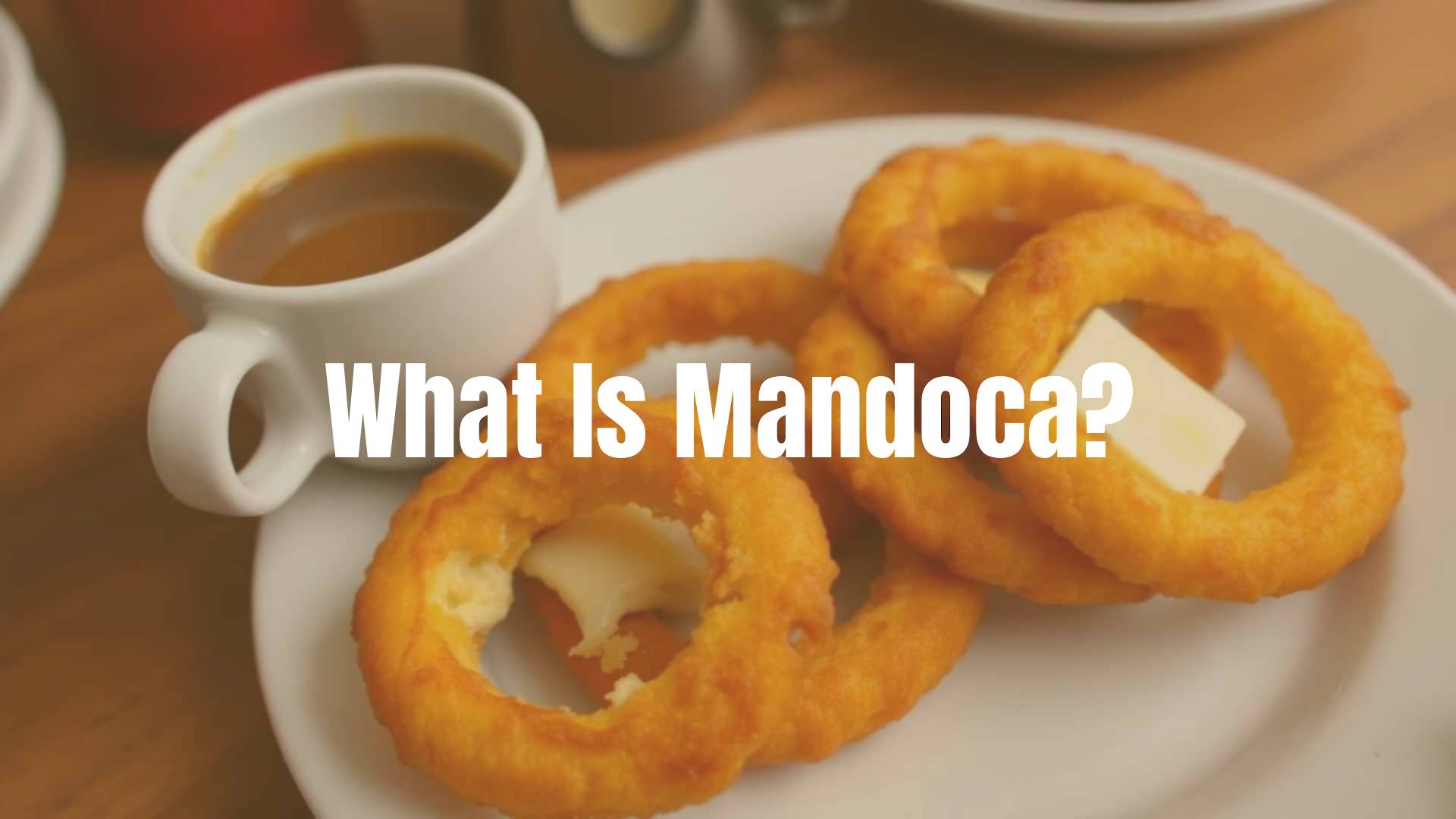
Mandoca is a traditional Venezuelan deep-fried cornmeal ring, loved for its sweet and salty flavors. The classic version uses ripe plantains, which give it a natural sweetness and soft feel inside. The outside turns golden and crispy after frying, while the inside is soft and has bits of cheese mixed in. This combination is what makes mandoca special and enjoyable.

Mandoca is usually served warm in Venezuela, often with butter, cheese, and a hot cup of coffee. It is a common breakfast food, but it also brings back childhood memories and feelings of home for many Venezuelans.
Where Did Mandoca Originate?
Mandoca first became popular in the western state of Zulia, Venezuela. This area, known for its strong food traditions and the famous Maracaibo Lake, is where mandoca started. Even though its popularity has spread to other places, it is still mostly eaten in Zulia and Falcon states.
Mandoca began as a homemade dish, not made for stores or large groups. People made it at home and passed the recipe down through their families. Even today, despite new cooking trends, mandoca is still an important part of Zulian food culture.

What Makes Mandoca Unique in Venezuelan Cuisine?
Mandoca stands out in Venezuelan food because of its mix of sweet and salty flavors and its special texture. Unlike other corn-based recipes, mandoca combines the sweetness of ripe plantains and brown sugar (also called panela or piloncillo) with the salty taste of grated white cheese. This creates a flavor that is both comforting and interesting.
Mandocas are shaped into rings or loops. This form helps them fry evenly, making them crispy on the outside while staying soft and cheesy on the inside. Some recipes use only cornmeal, but the traditional plantain version is softer and more flavorful.
Mandoca Ingredients and Key Components
Mandoca is made with just a few basic but flavorful ingredients. Each one plays an important part in the final taste and texture of this Venezuelan snack. Knowing these helps you make real mandocas at home.
Main Ingredients Used in Mandoca
The basic ingredients for mandoca are:
- Very ripe plantains
- Cornmeal (usually Harina P.A.N.)
- Water
- Salt
- Sweetener like sugar or panela (unrefined cane sugar with a deep flavor)
- Grated hard, salty white cheese (such as “queso blanco” or Queso Llanero)

Optional extras include spices like cinnamon, anise seeds, or allspice berries for extra aroma.
Role of Plantains in Mandoca Preparation
Ripe plantain is the main part of the classic mandoca. It gives natural sweetness, a smooth texture, and helps hold the dough together. You want plantains that are mostly yellow with some black spots – these will be sweet and soft. Boil the plantains with the peel on until soft, then mash into a purée so it can mix well with the other ingredients.
Which Type of Cheese Is Best for Mandoca?
The best cheese for mandoca is a hard, salty white cheese that won’t melt away completely while frying. Common options are “queso blanco,” Queso Llanero, or Queso Palmita. If you cannot find these, a firm farmer’s cheese or Mexican queso blanco can work, but the saltiness is important to balance the plantain’s sweetness.
Are Mandocas Made with Cornmeal or Other Flours?
Though ripe plantains are key, cornmeal is also important. It adds structure and crunch. The common choice is pre-cooked corn flour such as Harina P.A.N. Other flours are rarely used since they change the taste and texture too much. The best mandoca uses both plantain and cornmeal for a crispy outside and soft inside.
How to Prepare Mandoca: Step-by-Step Guide
Making mandocas is easy with a few steps and the right techniques. The whole process is simple and does not require special skills.
Essential Equipment for Making Mandoca
You only need basic tools:
- Large pot (for boiling plantains)
- Bowl (for mixing and mashing)
- Fork or potato masher
- Frying pan or large pot for deep-frying
- Cooking oil
- Slotted spoon or tongs
- Paper towels (for draining)
A thermometer is helpful to check oil temperature (about 350-375°F or 175-190°C).
Shaping the Mandoca: Traditional Techniques
To shape the mandoca, roll a handful of dough between your palms until you get a stick about 5-7 inches long. The dough shouldn’t be sticky. Bring the two ends together to form a circle or teardrop and press them slightly to seal. This shape helps the mandoca fry evenly and get that crisp outer layer.

How to Fry Mandoca for the Best Texture
Heat the oil until it reaches 350-375°F (175-190°C). Fry a few mandocas at a time so you don’t cool the oil too much. Cook until they are a rich golden brown, about 2 minutes per batch, and turn them halfway. Remove from the oil with a slotted spoon and drain on paper towels. This way, the outside stays crispy and the inside stays soft and cheesy.
Tips for Achieving Authentic Flavor
- Use very ripe plantains for the best sweetness.
- Use panela instead of white sugar for a deeper flavor.
- Grate the panela before mixing to spread its flavor evenly.
- Don’t hold back on the cheese-good cheese is important for the salty taste.
- Try adding a bit of anise or cinnamon for extra traditional flavor.
Serving and Enjoying Mandoca
Freshly made mandocas are best enjoyed warm. They are great alone, but you can serve them with different sides and dips for a fuller experience.
Best Times to Serve Mandoca
Mandocas are most popular as a breakfast food in Venezuela. The mix of sugars and cheese makes them filling and satisfying. They are also eaten as snacks during the day, especially with coffee or tea. While they are best fresh, you can make them ahead and reheat them if needed.
Popular Dips and Sides to Pair with Mandoca
Mandocas are often paired with:
- Extra grated white cheese (like Queso Palmita or Queso Fresco)
- Nata Venezolana (a thick, creamy Venezuelan dairy spread)
- Butter
- Maple syrup (for those who prefer them a little sweeter)

These sides add to the taste and make mandocas more enjoyable.
Traditional Venezuelan Beverages to Accompany Mandoca
Coffee is the most common drink with mandoca, especially strong black coffee or café con leche. If you don’t want caffeine, fresh fruit juice (like passion fruit or guava) or hot chocolate are tasty choices.
Regional Variations and Similar Venezuelan Dishes
Mandocas may be simple, but there are small differences between regions in Venezuela, and the dish can be compared to other Latin American fritters.
How Do Mandocas Differ Across Venezuela?
Mandoca recipes change slightly from place to place. In Zulia, there is usually more ripe plantain, making the mandoca sweeter and softer. In other areas, there might be more cornmeal for a firmer texture or a different type of cheese depending on what is available. However, the main elements-plantain, cornmeal, and cheese-stay the same everywhere.
Comparing Mandoca to Other Cornmeal Fritters
| Dish | Main Ingredients | Key Difference |
|---|---|---|
| Mandoca | Plantain, cornmeal, cheese | Sweet and salty with cheese, shaped into rings |
| Arepa | Cornmeal | Bread-like, often filled after cooking |
| Hush Puppies | Cornmeal | No plantain or cheese, only savory |
| Aborrajados (Colombia) | Plantain, cheese | Cheese-stuffed and fried, not mixed in dough |
What Are Common Substitutes for Mandoca Ingredients?
- Panela: Use dark brown sugar if you can’t find panela.
- Cheese: Substitute with firm farmer’s cheese or mild feta (use less due to saltiness).
- Plantain: If fully ripe plantains aren’t available, use slightly less ripe ones and add a little more sweetener.
Changing key ingredients can affect the taste, so use the traditional ones whenever possible for best results.
Nutritional Facts and Dietary Considerations
If you’re interested in the nutrition of mandoca, here’s a simple breakdown of what to expect:
Calories and Macronutrients in Mandoca
| Per Serving (example) | Approximate Amount |
|---|---|
| Calories | 186 kcal |
| Carbohydrates | 42g |
| Protein | 2g |
| Fat | 2g |
Mandocas are high in carbs and calories because of the frying, plantains, and sugar. It’s best to eat them as a special treat rather than every day.
Is Mandoca Suitable for Gluten-Free Diets?
Mandocas are usually gluten-free, especially if you use certified gluten-free cornmeal. Always check product labels to make sure there’s no contamination for those with serious gluten allergies or celiac disease.
Tips for Making a Healthier Mandoca
- Bake or air fry instead of deep frying to lower fat content.
- Brush a small amount of oil if using the air fryer to keep them crispy.
- Reduce the amount of sugar or panela if you want less sweetness.
- Use a lighter cheese if you want to cut down on fat.

These changes make mandoca lighter while still tasty.
Frequently Asked Questions about Mandoca
Find answers to the most common questions below.
Can Mandoca Be Made Ahead and Frozen?
Yes, you can shape the dough and freeze the uncooked mandocas on a tray. Once frozen, put them in a freezer bag. Fry them straight from frozen, adding a bit of time to make sure they cook through. This makes it easy to have fresh mandocas whenever you want.
Are There Sweet and Savory Versions of Mandoca?
Mandoca is always both sweet and salty, thanks to the plantain and cheese. Some people prefer it a little sweeter or saltier, but the classic mandoca includes both flavors together.
How Long Can Mandoca Be Stored?
Mandocas taste best right after frying. If you need to store them, keep them in an airtight container at room temperature for up to 2 days or in the fridge for 3-4 days. To reheat, use a toaster oven or air fryer. For long-term storage, freeze un-fried dough shapes and cook them when needed for the closest experience to fresh mandoca.
