

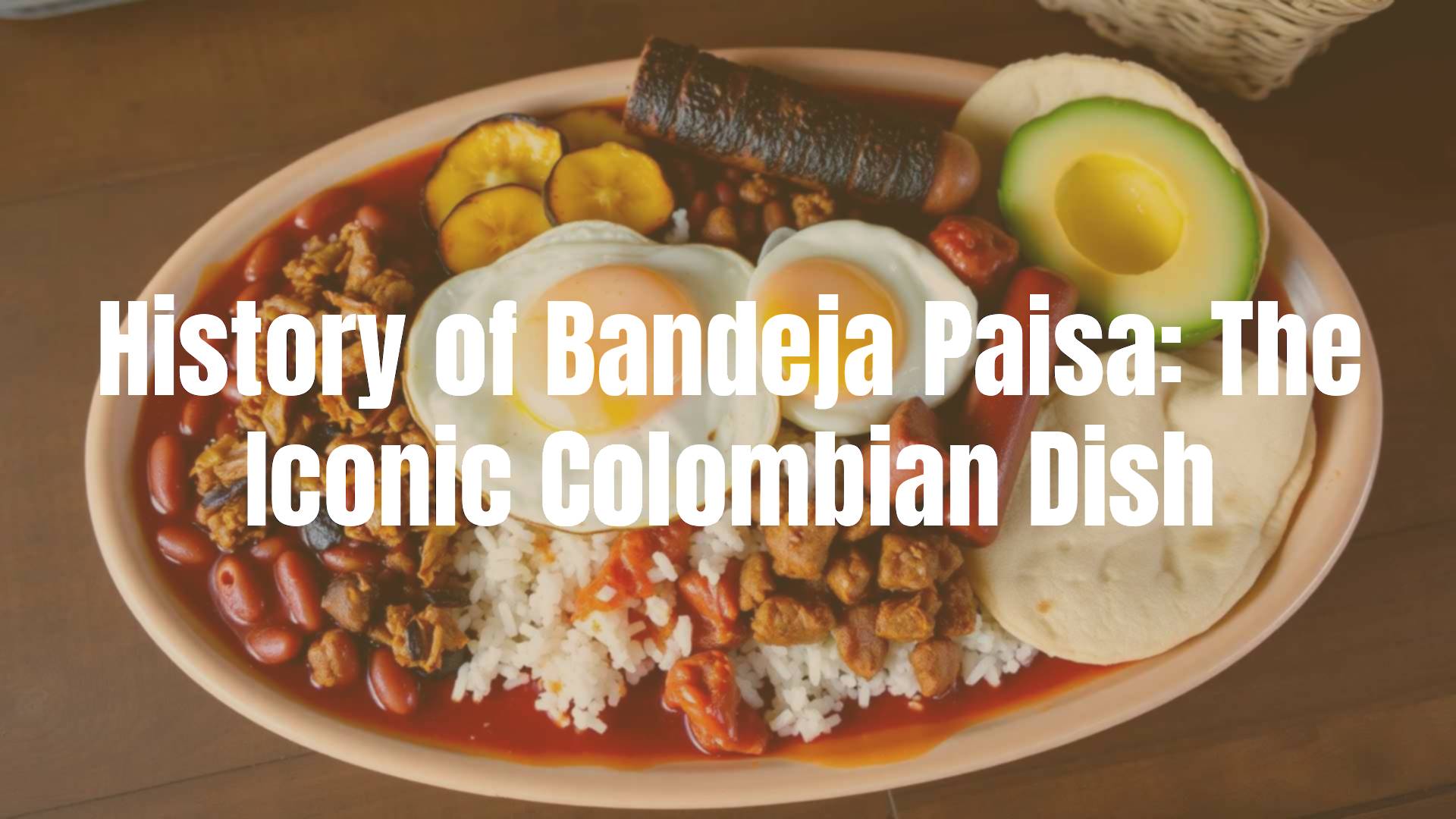
Bandeja Paisa, which means “Paisa platter,” is much more than just food. It’s a lively and filling dish that shows off Colombian culture. While it may seem like an old tradition, its current version is a mix of old and new influences. This famous meal-usually including red beans, rice, ground meat, chicharrón (crispy pork belly), fried egg, plantain, chorizo (sausage), arepa, and avocado-is especially popular in the Paisa region of Colombia. However, how it became an iconic dish is more involved than it first appears.

The appeal of Bandeja Paisa is in how all its parts come together on one large oval plate. It’s not only about feeding your hunger; it’s about feeling the warmth, hard work, and rich farmland of the Paisa region. What started as a simple meal for field workers has become a symbol of Colombian cooking. The story of Bandeja Paisa is about change, mixing influences, and a strong link to the people and land of Colombia.
Where Did Bandeja Paisa Begin?
The Paisa Region of Colombia
Bandeja Paisa is named after the Paisa region, which sits in northwest Colombia in the Andes mountains. The word “Paisa” refers to people from this area, who have their own culture, accent, and reputation for hard work. The region covers the departments of Antioquia, Caldas, Risaralda, and Quindío completely, as well as parts of Tolima and Valle del Cauca. Main cities include Medellín, Pereira, Manizales, and Armenia.

Antioquia, in particular, is strongly linked to Bandeja Paisa. The dish started there as a filling and energy-rich meal for farmers and laborers, giving them the energy needed for long days in tough conditions. The need for a big, nourishing meal explains why Bandeja Paisa uses so many different ingredients and has big portions.
Cultural and Historical Influences
Bandeja Paisa has roots from different cultures that have shaped Colombia’s food over time. It brings together traditions of the Indigenous people, Spanish settlers, and Africans. This mix is clear in the main ingredients-a blend of native and European foods.
For example, local beans, corn (used for arepas), and plantains were main foods for Colombia’s Indigenous peoples. When Spanish settlers arrived, they brought pigs, which quickly became a food staple. People learned how to cook and use every part of the pig, which led to dishes like chicharrón (fried pork), chorizo (sausage), and morcilla (blood sausage). Other details, such as techniques from African cooking brought through the slave trade, also shaped how foods were prepared. Because the region is surrounded by mountains, these cooking styles developed in their own way, creating a food tradition unique to the Paisa area.
| Influence | Main Contributions |
|---|---|
| Indigenous | Beans, corn, plantains, arepa |
| Spanish | Pigs, chicharrón, chorizo |
| African | Preparation methods, seasonings |
How Did Bandeja Paisa Change Over Time?
Origins in Rural Colombian Food
Bandeja Paisa didn’t start in fancy restaurants but in the kitchens of Colombian farmers and workers. Their jobs were demanding, so they needed food that gave them a lot of energy. Early versions of Bandeja Paisa were meant to be filling and used ingredients people could easily find. The focus was on simple, hearty foods like beans, rice, and pork rather than on food presentation. This is why today’s Bandeja Paisa is such a big, satisfying meal-its roots are in hard work and the need for strength.

Mixing of Traditions
Bandeja Paisa grew from the mixing of Spanish, Indigenous, and African ways of eating. From the Indigenous people, staples like corn (for arepas), beans, and avocados were included. The Spanish brought cattle and pigs, giving rise to many pork dishes. By using new and old foods together, local cooks made something new. African influences also affected how foods were made, even if those details are harder to see now. This blend led to the unique taste, look, and style of Bandeja Paisa we know today.
Recipe Developments
The modern Bandeja Paisa, with its mix of beans, rice, meats, plantains, egg, and more, is a fairly recent creation. For a long time, variations of the dish were based simply on whatever ingredients people had at the time and were mostly eaten for energy. Over time, restaurants and cooks began arranging all these ingredients together on one large plate or tray, which is now what we expect when we order Bandeja Paisa.
There are many local variations. For example, in some places, they put French fries instead of fried plantains, or they may add chicken or fish. Even the recipe itself changes from one restaurant or household to another, showing how flexible the meal can be.
| Common Ingredient | Description |
|---|---|
| Red beans | Usually cooked with pork |
| Rice | White rice as a base |
| Ground beef | Often seasoned and cooked |
| Chicharrón | Crispy pork belly or rinds |
| Egg | Fried and placed on top |
| Plantain | Usually fried and sweet |
| Chorizo | Grilled or fried sausage |
| Arepa | Corn patty |
| Avocado | Fresh slices |

Modern Recognition in the 20th Century
Even though the roots of Bandeja Paisa go back many years, the version we know today didn’t appear in cookbooks or writing until after 1950. Around this time, Colombia started to put more importance on celebrating its food and traditions, especially those that showed off the different regions of the country. As a result, Bandeja Paisa began to be promoted as a symbol of the Paisa identity.
When the Colombian government thought about naming Bandeja Paisa the national dish in 2005, it caused a lot of discussion. Some people said it did not represent all parts of the country. In the end, it wasn’t given this official title, but tourism campaigns made Bandeja Paisa known as the most classic Colombian dish. Nowadays, you’ll see it offered in restaurants all over Colombia and even in Colombian spots worldwide.
Why Does Bandeja Paisa Matter for Colombian Culture?
Showing Paisa Identity and Regional Pride
Bandeja Paisa is a powerful symbol of Paisa culture and identity. The dish is a reminder of the hard work, unity, and welcoming nature of people in the region. Its generous size sends a message of abundance and gratitude for what the land provides. The dish is found at family gatherings, festivals, and during other important times, connecting people and passing down traditions from one generation to the next.
- Brings family and friends together
- A sign of hospitality and sharing
- Reminds people of home and community

Place in Colombian Food Nationwide
Although its roots are in one region, Bandeja Paisa has become known throughout Colombia as a key part of the country’s food culture. For many, it sums up what Colombian food is all about-big, satisfying, and flavorful. Even though Colombia has many different food traditions, Bandeja Paisa stands out and is often one of the first dishes people think of when talking about Colombian cuisine.
Bandeja Paisa as a National Symbol
For years, there has been debate about making Bandeja Paisa Colombia’s official national dish. In 2005, there was even talk about changing the name to “bandeja montañera” to appeal to more regions. Some said other dishes, like sancocho or ajiaco, would be a better choice because they are eaten in more areas. Still, Bandeja Paisa continues to be promoted as a symbol of Colombian heritage by restaurants, chefs, and the tourism industry.
Bandeja Paisa’s popularity shows how much it means to people, not just for its taste, but for its connection to memories, family, and the strength of the Paisa community. Whether official or not, it continues to represent the warmth, culture, and traditions of Colombia for people both at home and abroad.
